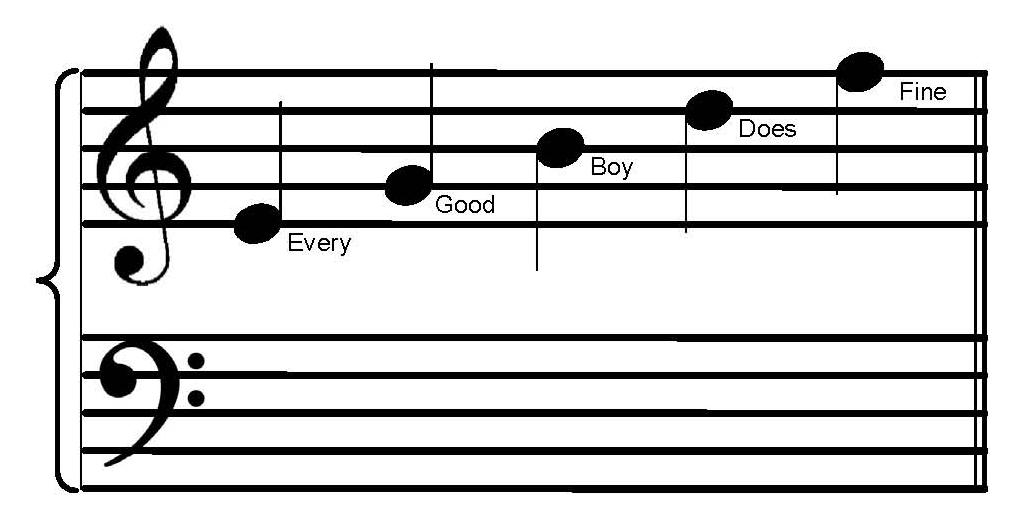
The activity my group created was a Social Studies based lesson. In order to master any lesson in that field, a student must first be able to think "historically." This means students must first be able to ask questions such as, "Why is the law (x) frowned upon?" or "Why do we use (x)?" As teachers it is our job to first teach students how to question, so once that is done, they can do it on their own. The next step would be to make sure the students can understand the time frame and how society was different at that time. Our job is to give them as much background information on a different time in society as we can and help students understand how to relate that to their everyday lives now to more fully understand the concepts. The next skill would be working on their memory. While the Social Studies curriculum is trying to move away from a reputation of pure remembrance of facts and dates to a more useful, applied curriculum, there is still a need for memory to serve as a main part of any course. Helping students remember important information, using mnemonics and other memory retrieval functions, will greatly improve students' success in this subject. I would say the last skill needed to fully understand this lesson would be the ability to piece all information together. Having students understand what went on at a previous time in society then understand how those actions impacted the society they are a part of now. As teachers, we must make sure that we lead our students through this sequence of understanding so that they can fully understand everything in the activity.
I had a discussion in my Elem Ed. 422 class about activities for Social Studies. This activity included having children research their family backgrounds and creating a timeline of parents, grandparents, and as far back as they could research. Once that was finished, you could extend the lesson into the actual Social Studies timelines of important history so they have an idea of how each event leads to the next. Another activity is to engage the students with a story about a president or other historical figure, then have them research a person from a time period around the one you read about. By doing this, you allow them to then connect each individual students research to a timeline of history.
Monday, February 25, 2013
Monday, February 18, 2013
PLE #5 Memory Processes
I really enjoyed having the presentations on memory functions last week. From what I learned about the specific processes I believe it will definitely inspire me to include different techniques during my lessons. I always learn better by using mnemonics and rehearsal, so I feel like there would be many students in my class that would benefit from that same type of learning. The decisions I would make based on what I've learned so far would be to both teach my students how to create mnemonics and also use my own examples throughout my lessons so that if some students can't think of one, maybe what I give them will help. I will also try my best to use the elaboration technique so that I can begin the processes of connecting old information to the new stuff we are learning. I think a word wall would be essential in any part of the memory process, either to recall the words that need work or to build better mnemonics with the words available.
Also, based on the time span for short and long term memory, I will be sure to somehow work in a review session as often as possible just to keep the basic ideas of the information fresh for the students. In order to help with this, I could see myself having an assignment for the students to create their own type of mnemonic so that their creative aspect for whatever the lesson may be will at least be one thing that maybe sticks with them.

Article on Mnemonics
Mnemonics Article
Also, based on the time span for short and long term memory, I will be sure to somehow work in a review session as often as possible just to keep the basic ideas of the information fresh for the students. In order to help with this, I could see myself having an assignment for the students to create their own type of mnemonic so that their creative aspect for whatever the lesson may be will at least be one thing that maybe sticks with them.

Article on Mnemonics
Mnemonics Article
PLE #4 Cognitive Processes
The skills that I want my students to learn is a mix of all skills needed to help them succeed in school. As cheesy as that sounds, I think that because all students learn best in different ways, it would be of everyone's best interest to be able to adjust their learning processes depending on the subject and difficulty of what they are learning. I want my students to be able to use their short-term and long-term memory in conjunction with the construction process as they create and understand new meanings. I want them to be able to create mnemonics for themselves and be able to really learn in no one, set way. What I really want to convey to my students is that they are capable of creating a way of learning that really works for them. I really want to try to show them different strategies they can use and I'll do this by in a way, becoming a constructivist or behaviorist, and helping lead each individual student to what will help them the best. This article simply discusses using assessments of cognitive functioning in order to help children achieve higher. I thought it was appropriate to incorporate assessment with cognitive processes.
Cognitive Processes Article
Wednesday, February 6, 2013
Ch. 14 Assessment
Getting ready to go into elementary education, it is essential to realize what kinds of assessment would be appropriate for a social studies lesson. Seeing as how different grade levels would need different kinds of assessment. For this post, I will take inspiration from the class I'm getting my practicum experience with, a 5th grade class. For informal assessment, I would use a question/answer session during the lesson to make sure that the students were following along and understanding as I teach. I would use questions like, "So what year was X?" so that the students would have to feed back the answers. The second type of informal assessment I would use would be to have the students each read a little something out of the section in the book we were in. This would allow me to tell whether the students were following along in the lesson and also allow me to measure their reading skill outside of the time set aside for specific reading purposes. Another way I could assess their knowledge would be to have them create a timeline as we go through our lessons each week, monitor the classroom to see if they had any questions, then take it up at the end of the week to serve as both an informal and formal assessment. There would also need to be a written test at the end of the section to assure that they students have retained their information. I would also like to use things such as history-related poetry, and story-writing assignments as formal assessment. I would use things such as having the students situate themselves in a particular moment in history and writing as if they are keeping a diary of everything that is happening around them, maybe do something like having certain groups of students be situated in certain times of on different sides of a particular war to see what kind of emotions I could bring about from them.There are many questions you could do with facts about the presidents and also states and their capitals. Any of these assessments could be used for any of the different lesson topics with the Social Studies curriculum.
Wednesday, January 30, 2013
A Learning Conducive Classroom
From what I have seen in my job and at school, it is near impossible to create a perfect classroom. So, we as teachers need to be aware of how to get as close as possible.
It seems that the best classroom experiences come from a class with periodically changing cooperative learning groups and a trusting, respectful relationship between the students and the teacher. My personal experiences have come from these experiences: ones where I can trust that the teacher cares for our success in the class and overall learning and one where I can work with friends but also have an opportunity to meet new people.
Providing students with a chance for maintaining social interactions is a good way to help them be more confident in their abilities and provides a trust between the students that may aid in a confidence with asking for help or even helping clarify for someone else. Having a classroom provide a multitude of experiences for children is a great way to help give them the opportunities they may not have otherwise, especially since there are so many other economic or social factors, as well as different atmospheres in the children's home lives that affect their everyday routines. The classroom should be a place to secure these children in all their needs so their desires and ability to learn are at the maximum potential.
As far as the CSEL case study goes, I would first try a behavior sheet or some sort of small punishment for her acting out. This would be used as a tool basically just to let her and her parents know that her behavior in class is inappropriate and is distracting for her learning as well as her classmates. I would probably follow up the sheet with a phone call to parents just ensuring they received the letter and to gage my understanding of the help they are going to offer in this situation.
Assuming that did not work, I would try to rearrange groups and see if I had missed someone she could actually work with in previous attempts at reforming the groups. The next step would be to use the parents if they did seem to be interested in helping me solve the problem.
As my last resort, I would have to move her out of group work and have her by herself unless I could get her to communicate with me about what her problem is whether material, people, or just stubborness and see if we could come to a compromise on how she participated throughout the class.
Since everything we do is somehow based on previous experiences, I thought this article would be interesting if it was learning conducive classrooms in upper education.
http://www-rohan.sdsu.edu/dept/jle/vol1.html
It seems that the best classroom experiences come from a class with periodically changing cooperative learning groups and a trusting, respectful relationship between the students and the teacher. My personal experiences have come from these experiences: ones where I can trust that the teacher cares for our success in the class and overall learning and one where I can work with friends but also have an opportunity to meet new people.
Providing students with a chance for maintaining social interactions is a good way to help them be more confident in their abilities and provides a trust between the students that may aid in a confidence with asking for help or even helping clarify for someone else. Having a classroom provide a multitude of experiences for children is a great way to help give them the opportunities they may not have otherwise, especially since there are so many other economic or social factors, as well as different atmospheres in the children's home lives that affect their everyday routines. The classroom should be a place to secure these children in all their needs so their desires and ability to learn are at the maximum potential.
As far as the CSEL case study goes, I would first try a behavior sheet or some sort of small punishment for her acting out. This would be used as a tool basically just to let her and her parents know that her behavior in class is inappropriate and is distracting for her learning as well as her classmates. I would probably follow up the sheet with a phone call to parents just ensuring they received the letter and to gage my understanding of the help they are going to offer in this situation.
Assuming that did not work, I would try to rearrange groups and see if I had missed someone she could actually work with in previous attempts at reforming the groups. The next step would be to use the parents if they did seem to be interested in helping me solve the problem.
As my last resort, I would have to move her out of group work and have her by herself unless I could get her to communicate with me about what her problem is whether material, people, or just stubborness and see if we could come to a compromise on how she participated throughout the class.
Since everything we do is somehow based on previous experiences, I thought this article would be interesting if it was learning conducive classrooms in upper education.
http://www-rohan.sdsu.edu/dept/jle/vol1.html
Monday, January 21, 2013
Motivation
After discussing the theories of motivation in class, I feel like almost all of them can be helpful if used properly. The theories that I find most useful would be the goal theory and the attribution theory, again though if used correctly. As in the attribution theory, one could determine a locus of control outside the self which would lead to almost an expectancy theory based on whichever locus gets contributed for each action. However, if used at face value and one would attribute all successes to the self then it seems as though that would boost motivation and also allow for the goal theory to work into the mix where one can incorporate goals and be intrinsically motivated. I know I can be both intrinsically and extrinsically motivated so it seems being able to have a mix of theories that apply to oneself would be beneficial if they all work well together.
I feel like as far as the theories would apply to the students, a goal theory would be very beneficial both to you and to the student as it would increase their likelihood of success in the classroom if they wanted to be reaching for these goals and it would help you out in the assurance that your students would take something away from your lesson because they wanted to learn, or complete an assignment because they have set a goal. An attribution theory would be beneficial if you could teach the students what it meant to have an internal locus of control for both the positive and the negative to help them realize they have control over how they do in the classroom.
Even though I did not say this would be beneficial, I think it is important to realize that there will more than likely be a social cognitive or socio-cultural theory where certain students will just be different based on what the class is doing or who they are around. If we as teachers could get situations like that under control and put students in the best situation possible it would be beneficial to keep that thought in the back of our minds.
I thought this video was a great way to entertain the ideas of internal and external motivation, especially since what he discusses is what we'll have to do in our careers.
I feel like as far as the theories would apply to the students, a goal theory would be very beneficial both to you and to the student as it would increase their likelihood of success in the classroom if they wanted to be reaching for these goals and it would help you out in the assurance that your students would take something away from your lesson because they wanted to learn, or complete an assignment because they have set a goal. An attribution theory would be beneficial if you could teach the students what it meant to have an internal locus of control for both the positive and the negative to help them realize they have control over how they do in the classroom.
Even though I did not say this would be beneficial, I think it is important to realize that there will more than likely be a social cognitive or socio-cultural theory where certain students will just be different based on what the class is doing or who they are around. If we as teachers could get situations like that under control and put students in the best situation possible it would be beneficial to keep that thought in the back of our minds.
Wednesday, January 16, 2013
Ed Psych #1
After the first class meeting, I was excited to see many of the same faces from other classes. I have a feeling that will significantly help the semester and how comfortable I feel. Once we reviewed our syllabus and the plans laid out for the rest of the semester, the realization began to hit me that I am now actually in all the most meaningful classes I have ever taken in my collegiate career. The time for waiting has finally passed, and we are now closer than ever to achieving our dreams of being educators.
I am excited to also complete this Educational Psychology course. The very few things that concern me in the course are our teaching projects and the importance of them to the completion of the course. It is reassuring that we will be working with partners, and I do look forward to preparing this assignment.
My personal objectives for this class are not only being able to understand each and every concept presented but also to be able to apply those to the real classroom. Learning how to fit the right theory or practice with the individual kids in the collective classroom sounds like it will be a challenge, but it is one I am ready to face I'd like to explore the general motivation theories and the self-efficacy ideas further. I feel like those are two very important ideas when dealing with small children and will play an essential role in the children's individual efforts in the classroom.
I can't wait to dive in!
I am excited to also complete this Educational Psychology course. The very few things that concern me in the course are our teaching projects and the importance of them to the completion of the course. It is reassuring that we will be working with partners, and I do look forward to preparing this assignment.
My personal objectives for this class are not only being able to understand each and every concept presented but also to be able to apply those to the real classroom. Learning how to fit the right theory or practice with the individual kids in the collective classroom sounds like it will be a challenge, but it is one I am ready to face I'd like to explore the general motivation theories and the self-efficacy ideas further. I feel like those are two very important ideas when dealing with small children and will play an essential role in the children's individual efforts in the classroom.
I can't wait to dive in!
Subscribe to:
Posts (Atom)